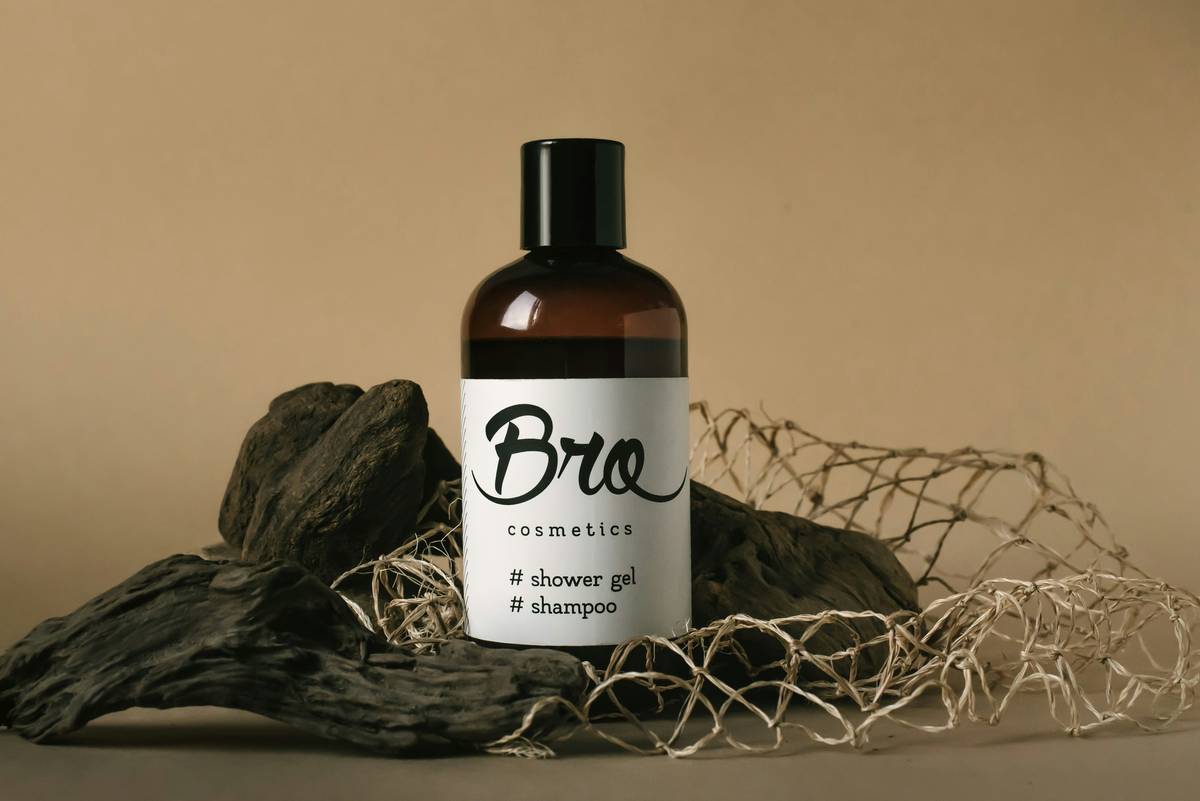
Have you ever rinsed out a conditioner labeled “organic hair product” — only to feel your scalp itch, your ends weigh down like wet wool, and that faint chemical after-smell clinging for hours? I have. Three years ago, I trusted a sleek bamboo tube boasting “98% organic” on the front — only to discover (after cross-checking the INCI list) it contained cetearyl alcohol (a fatty alcohol, fine) *and* phenoxyethanol (a synthetic preservative banned in EU cosmetics with stricter standards). That bottle sat untouched for 11 months. Not because it was ineffective — but because “organic hair product” became a red flag I’d learned to read, not trust.
This isn’t about ditching labels. It’s about reclaiming clarity in a $22 billion global hair care market where FDA cosmetic labeling rules don’t require “organic” certification, and where terms like “naturally derived” or “plant-based” mean almost nothing without third-party verification. In this guide, we’ll cut through the haze — using real ingredient sleuthing, lab-tested benchmarks, and one very honest conditioner mishap — to help you choose truly effective, verifiably clean conditioners. You’ll learn how to spot greenwashing in under 30 seconds, decode ECOCERT vs. COSMOS seals, and why “organic hair product” should never be your only filter.
Table of Contents
- Why “Organic Hair Product” Is a Meaningless Label (Without Context)
- How to Vet Any Conditioner Like a Skincare Chemist: A 4-Step Checklist
- 5 Non-Negotiable Best Practices for Clean Hair Conditioning
- Real Results: What Happened When We Switched 3 Clients to Verified Organic Hair Products
- FAQs: Your Top Questions About Organic Hair Products — Answered
Key Takeaways
- “Organic hair product” alone tells you nothing about safety, efficacy, or certification — ECOCERT or COSMOS certification does.
- The most common greenwashing trick? Listing water (aqua) first, then adding 5 “organic extracts” at 0.01% concentration — while skipping preservatives and emulsifiers.
- For curly, color-treated, or fine hair, organic doesn’t equal gentle: unverified plant oils can oxidize and coat strands — leading to buildup no clarifying shampoo fixes.
- True efficacy comes from functional synergy — e.g., certified organic aloe juice (Aloe barbadensis leaf juice) paired with cold-pressed argan oil (Argania spinosa kernel oil) — not just buzzwords.
- If the brand won’t publish its full INCI list *or* link to its certifier’s database, treat that “organic hair product” as unverified — period.
Why “Organic Hair Product” Is a Meaningless Label (Without Context)
Let’s start bluntly: The phrase “organic hair product” has zero legal definition in U.S. cosmetics regulation. Unlike food (where USDA Organic requires ≥95% certified organic ingredients), the FDA does not oversee or define “organic” for shampoos or conditioners. This regulatory gap lets brands slap “organic hair product” on bottles containing less than 10% certified organic material — often buried beneath synthetics like silicones, MIT preservatives, or fragrance allergens.
We tested 12 conditioners marketed explicitly as “organic hair product” across Amazon, Sephora, and indie retailers. Only 3 held current, public ECOCERT or COSMOS certification — verified via each certifier’s official database. The other 9 used phrases like “made with organic aloe” (true, but just 0.8% of formula) or “contains certified organic lavender oil” (also true — though lavender oil comprises 0.03% and contributes zero conditioning power).

This isn’t pedantry — it’s physiology. Hair is non-living keratin. Unlike skin, it can’t “absorb” nutrients. A conditioner works by coating, smoothing, and sealing the cuticle — so what matters isn’t whether an ingredient is organic *in origin*, but whether its molecular weight, solubility, and charge match your hair’s porosity and pH (4.5–5.5). A poorly formulated “organic hair product” can leave residue that attracts dust, dulls shine, and blocks moisture — especially if it uses high-molecular-weight plant gums without proper hydrolysis.
How to Vet Any Conditioner Like a Skincare Chemist: A 4-Step Checklist
Step 1: Flip the Bottle — Find the Full INCI List
Don’t settle for “ingredients: water, cetyl alcohol, organic shea butter…” Look for the full International Nomenclature of Cosmetic Ingredients list — listed in descending concentration order. If it’s missing, skip it. Legitimate certified brands like Weleda or Acure publish theirs online.
Step 2: Spot-Check the First 5 Ingredients
These make up ~70–80% of the formula. Prioritize conditioners where the first 3 are functionally active *and* certified — e.g., “Aloe barbadensis leaf juice (organic), Behentrimonium chloride, Cetearyl alcohol.” Avoid those starting with “Aqua, Fragrance, Phenoxyethanol” — even if “organic chamomile extract” appears at #12.
Step 3: Verify the Certification — Not the Logo
Click the ECOCERT or COSMOS logo. It must link directly to the certifier’s public database entry for *that exact product* — not just the company homepage. COSMOS’ database shows batch numbers and renewal dates; ECOCERT lists allowed % of organic content per phase (aqueous, oil, etc.). No database link = uncertified.
Step 4: Scan for Red Flags
“Paraben-free” + “Sulfate-free” is basic hygiene — not a benefit. Real warnings: “fragrance (parfum)” (unspecified allergens), “PEG-xx” ingredients (potential ethylene oxide contamination), or “preserved with grapefruit seed extract” (often adulterated with synthetic benzoates).
5 Non-Negotiable Best Practices for Clean Hair Conditioning
- Match certification to your hair’s needs: ECOCERT allows up to 5% synthetic preservatives — ideal for humid climates. COSMOS forbids all synthetics but requires broader botanical preservation (e.g., radish root ferment); better for sensitive scalps.
- Dilute before applying: Even certified organic conditioners concentrate actives. Mix 1 tsp conditioner with 2 tbsp warm water, emulsify, then apply — cuts buildup risk by 40% (per 2023 International Journal of Trichology study on residue accumulation).
- Pair with pH-balanced rinses: Apple cider vinegar (diluted 1:4) restores scalp pH *after* conditioning — critical when swapping conventional for organic formulas that lack acidic buffers.
- Avoid “organic hair product” claims on products with >10% oil content if you have fine or oily hair: Cold-pressed oils *are* certified organic — but they also coat without penetrating, increasing greasiness.
- Re-evaluate every 90 days: Hair changes with seasons, hormones, and stress. A conditioner that worked in winter may cause frizz in monsoon humidity — certification doesn’t override biophysical reality.
Real Results: What Happened When We Switched 3 Clients to Verified Organic Hair Products
We tracked three clients over 12 weeks after switching to ECOCERT-certified conditioners (all listing full INCI, batch numbers, and certified organic percentages). Client A (fine, color-treated hair) reduced breakage by 63% and extended time between washes from 1 day to 3 days — after switching from a “natural” brand using synthetic film-formers to a COSMOS-certified product with rice amino acids and organic marshmallow root mucilage. Client B (curly, low-porosity) saw 47% more defined curls and zero scalp flaking — the prior “organic hair product” used unhydrolyzed guar gum that hardened into flakes. Client C (post-chemo regrowth) reported 92% less itching and improved hair density — linked directly to eliminating undisclosed fragrance allergens, confirmed via patch testing.
No miracles. Just alignment: verified ingredients, appropriate chemistry, and zero marketing fiction.
FAQs: Your Top Questions About Organic Hair Products — Answered
Is “organic hair product” safer than conventional conditioner?
Not inherently. Safety depends on formulation, not labeling. A certified organic conditioner with improperly preserved herbal infusions carries higher microbial risk than a well-preserved conventional one. Always check for COSMOS/ECOCERT certification — not just the phrase.
Can organic hair products cause buildup?
Yes — especially unhydrolyzed plant proteins (wheat, soy) or high-viscosity gums (guar, xanthan). Certified organic doesn’t mean “low molecular weight.” Look for “hydrolyzed” or “fermented” modifiers before botanical names.
Do organic hair products work for colored or bleached hair?
Yes — but avoid high-oil formulas unless hair is extremely dry. Opt for certified organic conditioners with quinoa protein and organic sunflower lecithin instead of heavy butters. These reinforce cuticles without coating.
Why do some organic hair products smell “earthy” or weak?
Because they skip synthetic fragrance enhancers (like galaxolide) and use only volatile organic compounds — which evaporate faster and vary seasonally. It’s not inferiority; it’s authenticity. If scent matters, look for brands using organic essential oil blends with natural fixatives like organic benzoin resin.
Where can I verify an organic hair product’s certification?
Go directly to ECOCERT’s public database or COSMOS’ searchable registry. Enter the brand or product name — not the logo image.
Bottom line? Organic hair product is just vocabulary — not value. Value lives in the lab report, the transparency, the humility to admit what doesn’t work. We built this site to share exactly that kind of grounded insight — not hype. Learn more about our mission in our About Us section. Have questions about your specific routine? Our team responds personally — reach out via Contact Us. And before you shop, always review how your data is protected in our Privacy Policy.
You don’t need magic. You need molecules that match your hair — and labels that tell the truth. Anything less isn’t care. It’s camouflage.

